
9 Car Models That Were Great Until One Tiny Design Flaw
From sleek sports cars to reliable family sedans, many vehicles build lasting reputations, but sometimes one design flaw can undermine them completely. Whether it’s a safety risk, a usability annoyance, or a maintenance headache, tiny flaws that go unnoticed in marketing can hurt drivers for years. As a former mechanic, I can tell you there are plenty of cars with hidden flaws that may go overlooked. However, there are some that stand out. Here are nine car models that were otherwise great, until one design flaw revealed itself in dramatic fashion.
1. Ford Pinto

The Ford Pinto was marketed in the early 1970s as an affordable, compact car that could compete with European imports. Yet its design flaw lay in the location and protection of the fuel tank: rear-end collisions at moderate speed caused the tank to rupture, leading to fuel leakage and fires. Even though fixes were considered, such as shields, reinforced bumpers, or moving the tank, they were not implemented initially due to cost and schedule pressures. Public outcry, lawsuits (such as Grimshaw v. Ford), and recalls eventually followed. This example shows how a single engineering decision, intended for economy, became a lasting safety scandal.
2. BMW 7 Series (2002)

The 2002 BMW 7-Series did much right: powerful performance, luxury, and cutting-edge features. But its introduction of the BMW iDrive system exposed a design flaw in usability: many drivers found the menu-based controls difficult, requiring too much driver attention away from the road. Critics said that adding features was great until the controls became difficult to use safely at a glance. Over time, BMW made improvements in interface and software, but the original iDrive’s steep learning curve remains a cautionary tale. The lesson: if futuristic controls get in the way of basic tasks, even luxury suffers.
3. Triumph Stag

The Triumph Stag looked like a grand touring car dream with its V8, elegant lines, and open-top option. But this model gained a reputation for its design flaw in the engine cooling and timing chain setup. Its water pump and cooling passages, inherited from earlier engine designs, were placed such that overheating was almost inevitable in certain conditions. The timing chain was another weak spot: long simplex roller link chains would stretch, skip, or even fail under normal driving, causing major engine damage. Many owners reported repeated repairs, especially where the engine block warped because of uneven expansion and orientation of head studs. Despite its charm and performance, these flaws made ownership costly and unreliable.
4. Chevrolet Corvair

The Chevrolet Corvair had a unique rear-engine, swing-axle design that set it apart, but that same configuration harbored a design flaw in handling. In early models, during hard cornering, the rear tires would undergo extreme camber changes, reducing grip and leading to oversteer, making control difficult for many drivers. The lack of a front anti-roll bar and minimal structural reinforcement made the problem worse. Over time, GM attempted fixes, and later generations improved suspension, but the safety concerns had already impacted its reputation. It serves as a reminder that style and novelty must be matched by engineering that ensures predictable behavior.
5. Pontiac Aztek
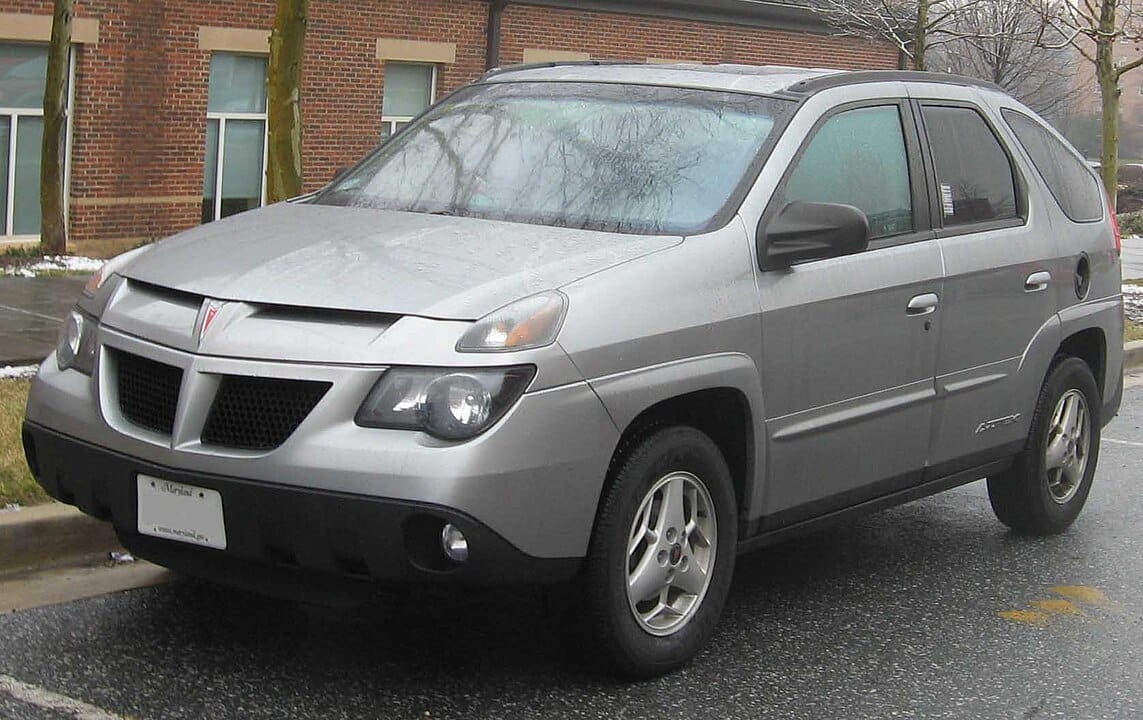
Pontiac Aztek was celebrated for practical space and flexible interior design, and many drivers loved its crossover capability. Yet it’s often remembered (fairly or unfairly) for a design flaw of aesthetics: its styling choices. The car’s proportions, bulky plastic body cladding, and “split-look” front end drew criticism, overwhelming what were reasonable utility features. While style is subjective, when a car’s looks become a liability, hurting resale value, brand image, and public perception, that becomes a very real flaw. Even GM’s marketing couldn’t fully overcome the negative press: the Aztek became a case study in how one aspect of design (appearance) can sink broader appeal.
6. The Yugo

The Yugo arrived in the U.S. as an inexpensive, simple car that many could afford. But its design flaw was a consistent pattern of poor build quality and reliability. Engines used older parts; there were issues with emissions controls, timing belts, and overall fit and finish. Drivers often complained of frequent breakdowns, lack of proper alignment, and that maintenance was more of a chore than with comparable cars. Even though pride of ownership sometimes overcame the shortcomings, the Yugo’s reputation never recovered.
7. Tesla Cybertruck

Tesla’s Cybertruck pushes the envelope in design, performance, and electric vehicle excitement. But in real-world testing, several tiny design flaws showed up: the windshield and interior can heat up excessively in the sun due to the large glass area and dark surfaces; control of vents and AC settings is often buried in touch screens rather than physical switches. The frunk (front trunk) locking mechanism and lack of interior grab handles also frustrated drivers. While most of these aren’t safety-critical, together they reduce comfort and usability in everyday operation. For such a premium-priced vehicle, these oversights show that innovation still needs fine-tuning.
8. Volkswagen ID.4/Audi Q4 e-tron

These electric crossover siblings impressed with range and utility. But their design flaw was less glamorous: a software issue that failed to display gear positions properly, risking rollaway if the parking brake is not set. The recall affecting over 60,000 vehicles in the U.S. highlighted how even digital/soft systems can harbor major risks. The good news is that software can often be updated, but getting the fix installed can be a hassle. Unfortunately, the flaw undermined buyer confidence and added cost to ownership.
9. Chevrolet Corvette Z06/ZR1 (2023-2026)

The Corvette continues its legacy with blistering performance, aggressive styling, and a devoted fan base. However, recent models had a design flaw involving the left-side radiator assembly and fuel filling design: excess fuel during refueling could spill onto hot engine parts, posing a fire risk. Because the issue depends on the design of the radiator and refueling mechanism, it’s not just occasional negligence; it’s structural. GM has issued recalls and plans to install a protective shield in affected models. Even superb horsepower and handling don’t matter much if safety comes into question.
Realizing When a Small Flaw Becomes a Big Problem
These nine car models show that even when everything else is nearly perfect (engine power, comfort, styling), a design flaw in one small area can ripple outward. It can degrade safety, owner satisfaction, resale value, or reliability. If you’re car shopping, always dig beyond headlines: read owner forums, recall histories, and technical service bulletins. A test drive helps, but also see how features like infotainment, safety systems, and even fuel or radiator placements work in your driving conditions. At the end of the day, a car with one well-designed flaw is far more livable than one with one flaw that was ignored.
Which car model do you think had the worst tiny design flaw? Share your story or opinion in the comments below!
What to Read Next
- 4 Car Models That Were Killed Off Too Soon
- 5 Car Models Mechanics No Longer Recommend After 2025
- Are You Driving One of the Most Break-In-Prone Car Models?
- 7 Car Models Men Search Most—And Mechanics Warn to Avoid
- 8 Car Models That Didn’t Make It Into the New Year
Related Posts
-

Weddings are a joyful celebration, but they can also come with a staggering price tag.…
-

Kids are growing up with the internet at their fingertips—but that convenience comes with serious…
-

Vitamins are a part of many people’s daily routine, trusted for better energy, stronger immunity,…
-

The modern workplace continues to reshape how families function, especially when it comes to fathers…
-

I've rented various homes throughout my 20s and now for the bulk of my 30s.…
-

There is no doubt that every couple goes through hard times at some point. Of…
