
8 Cars That Should Have Never Been Sold — Some Were Downright Dangerous
Some cars look great on paper but turn into rolling nightmares once they hit the road. Automakers sometimes rush designs, cut corners, or gamble on risky engineering, and drivers end up paying the price. These vehicles didn’t just disappoint—they raised serious safety concerns that still spark debate years later.
From fuel systems that caught fire to handling so unstable it made headlines, these cars earned reputations no brand wants attached to its name. Buckle up for a look at eight cars that never should have made it past the drawing board.
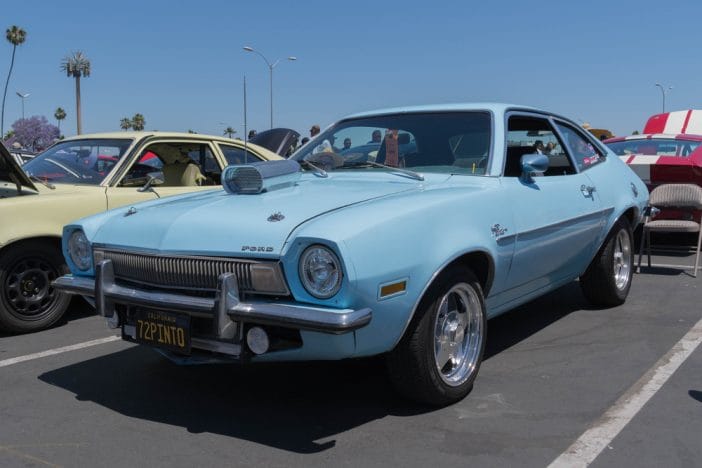
1. Ford Pinto
The Ford Pinto gained infamy for a fuel tank design that turned rear-end collisions into fire hazards. Engineers placed the tank in a vulnerable spot, and even low-speed impacts could rupture it. Reports revealed that executives weighed the cost of fixes against potential lawsuit payouts, which damaged public trust.
Drivers faced real danger every time they hit the road, and lawsuits piled up quickly. The Pinto now stands as a textbook example of what happens when cost-cutting overrides safety.
2. Chevrolet Corvair
The Chevrolet Corvair introduced a rear-engine design that created unpredictable handling. Drivers struggled with sudden oversteer, especially during sharp turns or emergency maneuvers. Consumer advocate Ralph Nader brought national attention to the issue in his book “Unsafe at Any Speed.” The controversy pushed automakers to take safety more seriously across the industry. Even today, the Corvair represents how poor engineering decisions can spiral into major public backlash.
3. Yugo GV
The Yugo GV arrived in the U.S. as a budget-friendly option, but its low price came with serious compromises. Owners reported frequent breakdowns, poor build quality, and unreliable performance. Safety features barely met minimum standards, leaving drivers vulnerable in accidents. Mechanics often joked that keeping a Yugo running required constant attention and patience. The car quickly became a punchline, but its reliability issues posed real risks on the road.
4. Ford Explorer (Early 2000s Models)
The early 2000s Ford Explorer faced widespread criticism due to tire failures linked to rollover accidents. Many incidents involved Firestone tires that separated at high speeds, causing drivers to lose control. Investigations uncovered issues with both tire manufacturing and vehicle stability. Families who trusted the SUV for daily driving suddenly found themselves in dangerous situations. The scandal led to recalls and permanently changed how companies handle safety defects.

5. Pontiac Aztek
The Pontiac Aztek drew attention for its unusual design, but its problems ran deeper than appearance. The vehicle suffered from poor structural integrity and lackluster crash test performance. Drivers expected versatility, yet they encountered mechanical issues and awkward handling. Despite creative marketing, the Aztek failed to win over consumers or critics. Its legacy proves that bold design means nothing without solid engineering to back it up.
6. Jeep CJ (Pre-1987 Models)
The Jeep CJ series built a reputation for rugged off-road capability, but it struggled with stability on paved roads. Its high center of gravity made rollovers far more likely than in other vehicles. Drivers who took sharp turns or sudden evasive actions often lost control. Lawsuits and safety concerns eventually forced design changes in later Jeep models. While enthusiasts still love the CJ, its risks made it a questionable choice for everyday driving.
7. Suzuki Samurai
The Suzuki Samurai gained popularity for its compact size and off-road appeal, but stability issues quickly surfaced. Consumer Reports labeled it prone to rollovers during emergency maneuvers, which sparked a major controversy. Suzuki fought back legally, but the damage to its reputation stuck. Drivers hesitated to trust a vehicle that could tip so easily under pressure. The Samurai serves as a reminder that fun and affordability should never outweigh safety.
8. Tesla Model S (Early Battery Concerns)
The Tesla Model S pushed innovation forward, but early models faced scrutiny over battery fires after debris struck the undercarriage. These incidents raised concerns about the safety of electric vehicle battery placement. Tesla responded quickly with software updates and protective shielding improvements. While later versions improved significantly, the early scares shook consumer confidence. The situation highlighted how even cutting-edge technology needs rigorous real-world testing.
When Innovation Goes Wrong: Lessons Drivers Shouldn’t Ignore
Car buyers often trust that every vehicle on the market meets high safety standards, but history proves otherwise. These cars show how design flaws, rushed production, and corporate decisions can create serious risks. Shoppers who research reliability ratings, recall history, and crash test results make smarter and safer choices. Automakers now face stricter regulations, yet consumers still need to stay informed before making a purchase. A flashy design or low price should never outweigh safety and reliability when it comes to choosing a vehicle.
What’s the worst car you’ve ever driven—or one you’d never trust on the road? Let’s hear your stories in the comments below.
You May Also Like…
Smart Automotive Choices That Can Lower Your Long-Term Vehicle Costs
More Cars Are Being Targeted in Parking Lots—And It’s Not for the Reason You Think
The Right to Repair Battle That Could Change How Cars Get Fixed
Why Vehicle Recalls Are Spiking and Which Cars Are Most Affected in 2026
State Troopers Say This Everyday Driving Gesture Is Now the #1 Reason Cars Get Pulled Over
Related Posts
-

The Coronavirus Pandemic has changed shopping behavior forever, but how are some brick-and-mortar businesses, like…
-

Have you seen the movie "Hall Pass?" It starred Owen Wilson and Jason Sudeikis. As…
-

Being a kid in the 1990s often meant living in two worlds—the one parents thought…
-

Everyone wants to save money. It feels good to find a deal or pay less…
-
How many times have you said "I'll do this if you do that" in your…
-

There comes a moment when the stress, the grind, and the lack of fulfillment become…
