
5 Reasons Leaving Too Much Money in Savings Can Backfire Financially

A savings account feels like the safest place on earth for money, almost like a financial comfort zone that promises zero stress and zero drama. Banks reinforce that feeling by emphasizing security, easy access, and stability, which makes the strategy seem foolproof at first glance. Yet that sense of safety often hides a slow financial drain that many people never notice until years later. Money sitting idle can quietly lose momentum while other financial opportunities keep moving forward.
The reality hits harder when inflation, low interest rates, and missed investment opportunities start working together behind the scenes. A balance that looks strong on paper can actually shrink in purchasing power over time without a single transaction. Smart financial planning does not reject savings accounts, but it does challenge the idea of overloading them.
1. Inflation Slowly Erodes Purchasing Power Without Making Noise
Too much money in a savings account loses value when inflation rises faster than interest rates, and that gap quietly chips away at buying power. A person who keeps $20,000 in a low-interest account might feel secure, but inflation can reduce what that money can actually buy each year. Even a 3% annual inflation rate can create a noticeable difference over a decade. That slow decline often goes unnoticed because account balances do not visually shrink. The damage shows up later at the store, the gas pump, and major life purchases.
Real-life budgeting scenarios highlight this problem in a clear way. A $50,000 emergency fund sitting idle for ten years might effectively behave like $37,000 in today’s dollars depending on inflation trends. That gap represents lost opportunity rather than visible loss, which makes it even more deceptive. Financial planners often stress that liquidity matters, but overloading cash reserves can weaken long-term purchasing strength. Too much money in savings account creates comfort today but reduces flexibility tomorrow.
2. Missed Investment Growth Shrinks Long-Term Wealth Potential
Too much money in savings account prevents money from entering assets that historically generate stronger returns like index funds or diversified portfolios. Over time, even moderate investment growth compounds far beyond what savings interest can deliver. A person who invests $10,000 at an average 7% return could see that grow significantly over 20 years, while a savings account barely keeps pace with inflation. That difference does not just feel large; it becomes life-changing in retirement scenarios. Wealth builds through time in the market, not idle storage.
Many people hesitate to invest because savings feel safer, but that caution can create long-term financial stagnation. A balanced approach often works better, where money gets split between emergency reserves and growth-focused investments. Financial advisors often suggest keeping only three to six months of expenses in liquid savings. Anything beyond that threshold in too much money in savings account often misses compounding opportunities. That missed growth can quietly widen the gap between financial stability and financial independence.
3. Low Interest Rates Create a False Sense of Progress
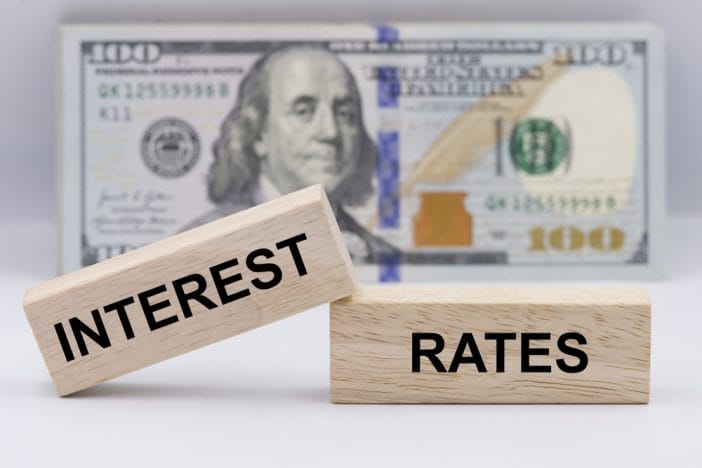
Too much money in a savings account often earns interest rates that fail to keep up with real economic growth. Even when banks advertise “high-yield” savings, returns frequently lag behind inflation and investment benchmarks. A balance might grow slightly in nominal terms, but the real value barely changes or even declines. That creates the illusion of progress while actual purchasing power stays flat. Many people confuse “more dollars” with “more wealth,” which leads to financial complacency.
A practical example makes this clearer. A $30,000 savings balance earning 2% interest grows to $30,600 in a year, which looks positive at first glance. However, if inflation hits 3%, that money effectively loses ground in real terms. Too much money in a savings account reinforces this illusion because the numbers rise slowly without meaningful financial advancement. True growth requires returns that outpace inflation, not just incremental account increases.
4. Opportunity Costs Drain Financial Momentum Over Time
Saving too much money comes with opportunity costs that rarely show up on statements but heavily impact long-term wealth. Every dollar sitting idle represents a dollar that could generate returns, build assets, or create income streams. Opportunity cost becomes especially significant during long time horizons like 10, 20, or 30 years. Financial momentum slows down when money stays parked instead of working. That slowdown compounds just as powerfully as investment growth does, but in the opposite direction.
Consider a scenario where someone keeps $40,000 in savings instead of investing it in a diversified portfolio. Over 25 years, that decision can translate into hundreds of thousands of dollars in lost potential growth. Saving a lot often feels responsible, but it can quietly reduce future financial freedom. Smart money strategies focus on balancing safety with growth, not choosing one exclusively. Opportunity cost acts like a hidden fee that never appears on bank statements but always shows up in long-term outcomes.
5. Over-Saving Can Delay Financial Confidence and Decision-Making
Too much money in your account can also create hesitation around investing, spending wisely, or building wealth strategies. Excess cash often leads to analysis paralysis, where financial decisions feel harder because everything stays “safe” in one place. That mindset can delay retirement planning, real estate decisions, or portfolio building. Money loses direction when it lacks a defined purpose beyond storage. Financial confidence grows when money actively participates in a strategy rather than sitting idle.
Behavioral finance research consistently shows that people who diversify their money feel more engaged with long-term planning. They make clearer decisions because they assign roles to different buckets of money. An excessive savings account removes that structure and replaces it with uncertainty about next steps. That uncertainty often leads to procrastination in wealth-building decisions. Clear financial action builds confidence faster than passive accumulation ever will.
A Smart Balance Is Better Than Excess Cash
Too much money in a savings account creates safety on the surface but introduces hidden costs underneath. Inflation, missed growth, opportunity loss, and behavioral hesitation all work together to weaken long-term financial progress. A balanced strategy separates emergency funds from investment capital, which helps money serve multiple purposes at once. That structure strengthens both security and growth instead of forcing a trade-off between them. Financial success rarely comes from extreme choices and instead rewards thoughtful allocation.
What would you do differently after seeing how idle cash can quietly lose value over time? Share your savings safety tips below.
You May Also Like…
Why Institutions Are Quietly Passing on U.S. Debt—And What It Means for Your Savings Account
Why The Private-Credit Boom Is Replacing Banks — And What It Means for Your Next Loan
Replacing Your Windows: Understanding the Cost and Long-Term Savings
The Forgotten Costs of Home Repairs That Sink Retirees’ Savings
Saving Money On Auto Repairs: Your Comprehensive Guide
Related Posts
-

Insurance is supposed to give peace of mind, but for many men, it’s a source…
-

Updated 7/9/2026. Editor’s Note: Drew Blankenship has spent decades working on and maintaining vehicles. He’s…
-

Confidence isn’t something you’re born with. It’s something you build, protect, and maintain daily. Yet…
-

Between work schedules, school demands, and digital distractions, carving out quality time together as a…
-

When I posted how I'm saving $1400 per year on my car/home insurance, I didn't…
-

There’s no shortage of financial advice out there. Podcasts, books, and YouTube channels are packed…
