
This “Normal” Knock at the Door Is Making Some Homeowners Call 911
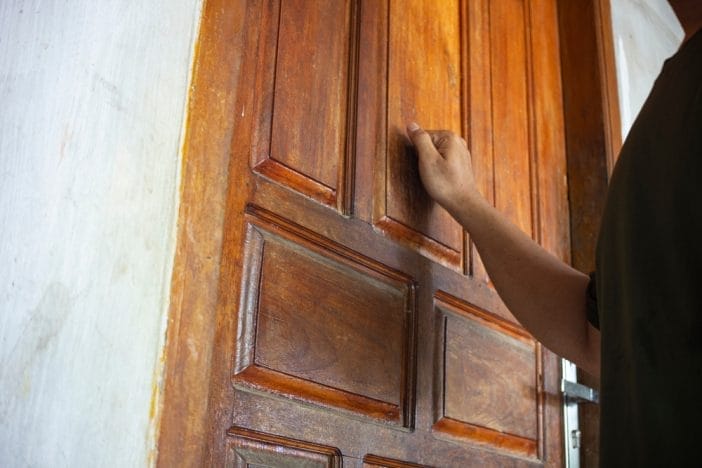
The sound hits sharp and steady, not frantic, not aggressive, just a simple knock that feels completely ordinary at first glance. No shouting, no doorbell spam, no obvious signs of trouble—just someone standing on the other side of the door, waiting. That calm, almost polite rhythm throws people off, because it doesn’t match the image of danger most expect. Yet across neighborhoods, that exact moment has started to spark something much stronger than curiosity. It has triggered unease, hesitation, and in some cases, a direct call to 911.
That reaction might sound extreme until the pattern becomes clear and the details start lining up. Homeowners have begun connecting dots between these “normal” knocks and suspicious activity that follows shortly after. The situation doesn’t rely on loud threats or forced entry attempts; instead, it leans into subtlety, timing, and observation. That quiet shift in approach has changed how people interpret something as simple as a knock at the door. What once felt routine now carries a question mark that’s hard to ignore.
The Knock That Doesn’t Feel Quite Right
Not all knocks land the same way, and people have started noticing when something feels just a little off. This particular knock often comes at unusual times of day, like mid-morning on a weekday or late in the evening when most legitimate visitors would think twice. It usually comes without any follow-up, meaning no second attempt, no doorbell, and no effort to make contact beyond that initial sound. That alone has raised eyebrows, especially when it happens repeatedly over several days or weeks. Patterns like that tend to stand out quickly once neighbors start comparing notes.
In many reported situations, the person at the door leaves almost immediately if no one answers, which might sound harmless on its own. However, that quick exit has raised suspicion because it suggests a specific purpose rather than a genuine attempt to connect. Some individuals have even been caught on security cameras walking up, knocking, and then scanning the property before leaving. That behavior has made people question whether the knock serves as a way to check if anyone is home. Once that possibility enters the picture, the entire interaction feels very different.
The discomfort grows when the same behavior appears across multiple homes in the same area. That repetition doesn’t feel random, and it doesn’t align with typical door-to-door sales or deliveries. People start watching more closely, sharing footage, and reporting what they see. That collective awareness often leads to increased caution, especially when local authorities confirm similar reports. At that point, the “normal” knock loses its innocence completely.
Why Some Homeowners Are Calling 911
Calling emergency services over a simple knock might seem like a big leap, but context matters more than the action itself. When homeowners notice repeated visits, strange timing, and unusual behavior, the situation starts to feel less like a coincidence and more like a setup. That sense of unease tends to build over time rather than appear instantly. Once it reaches a certain point, people choose caution over assumption, especially when safety feels uncertain.
Law enforcement agencies have addressed these concerns in various communities, often explaining that some individuals use knocking as a tactic to determine occupancy. If someone answers, the visitor may offer a vague excuse and move on. If no one answers, the property might become a target later. That explanation has pushed many homeowners to take these situations seriously, even if the initial interaction looks harmless. The idea of being watched or evaluated creates a level of urgency that people don’t ignore.
Technology has played a major role in this shift, especially with the rise of doorbell cameras and home security systems. These tools allow homeowners to review footage, track patterns, and share clips with neighbors or local authorities. Once multiple videos show similar behavior, the concern becomes much more tangible. That visibility has led to more reports and, in some cases, quicker responses from law enforcement. Instead of dismissing the knock, people now treat it as a potential warning sign.
The Fine Line Between Awareness and Panic
Staying alert matters, but jumping to conclusions can create unnecessary stress and confusion. Not every unexpected knock signals danger, and plenty of legitimate reasons still exist for someone to approach a home unannounced. Delivery drivers, neighbors, and service providers all show up without warning from time to time. The challenge lies in separating normal activity from something that feels suspicious without letting fear take over completely.
Clear thinking starts with observation rather than reaction. Paying attention to details like body language, timing, and repeated visits can provide valuable context without escalating the situation too quickly. Security cameras help, but even without them, simple awareness goes a long way. Taking a moment to assess before responding can prevent unnecessary panic while still keeping safety front and center. That balance makes a huge difference in how these situations unfold.
Communities play a powerful role in maintaining that balance. When neighbors communicate and share information, they create a broader picture of what’s happening in the area. That shared awareness helps people identify patterns without relying on guesswork. It also prevents isolated incidents from turning into widespread fear without evidence. A connected neighborhood often responds more effectively than individuals acting alone.

Smart Moves That Boost Safety Without Overreacting
Taking action doesn’t require dramatic steps or expensive upgrades; small, practical changes can make a noticeable impact. Installing motion-sensor lighting around entry points can deter unwanted visitors while also improving visibility. Keeping doors and windows secured at all times, even during the day, adds another layer of protection that many people overlook. These simple habits create a stronger baseline of safety without adding stress.
Using a doorbell camera or security system provides both visibility and peace of mind. These tools allow homeowners to see who approaches their door without opening it, which removes a lot of uncertainty. Even a basic camera setup can capture enough detail to identify patterns or share information if needed. That level of awareness often discourages suspicious behavior in the first place, since visibility reduces opportunity.
Another effective step involves setting clear boundaries when interacting with unexpected visitors. Speaking through a door, using an intercom, or simply choosing not to engage at all can keep situations under control. Trusting instincts plays a key role here, especially when something feels off without a clear explanation. That internal signal often picks up on details that logic might miss in the moment. Acting on that awareness, rather than ignoring it, helps maintain control without escalating unnecessarily.
When a Knock Means More Than Just a Visitor
That simple knock carries more weight now than it did before, not because it changed, but because awareness has shifted. People have started paying closer attention to patterns, behavior, and timing, and that awareness has reshaped how they respond. The goal doesn’t revolve around fear; it centers on staying informed and prepared without losing perspective. A knock can still mean something completely harmless, but it no longer gets a free pass without a second thought.
Situations like this highlight how quickly everyday moments can take on new meaning when patterns emerge. They also show how communities adapt, share information, and look out for each other when something feels off. That combination of awareness and action creates a stronger sense of control, even in uncertain situations. Staying alert doesn’t mean expecting the worst; it means recognizing when something deserves a closer look.
What feels like the right move in that moment? Drop your thoughts, strategies, or even experiences into the comments and see how others are handling it too.
You May Also Like…
Homeowners Are Reporting the Same Strange Sign Before Break-Ins—And Police Are Taking Notice
A Growing Number of Homeowners Are Facing Fines Over This Overlooked Detail
The “No-Guest Home” Rule: Why Some Homeowners Won’t Let Anyone Inside Anymore
10 Things Home Safety Experts Say You Shouldn’t Store in a Garage
