
8 Things Guests Notice Immediately That Reveal Your Financial Situation

Walking into someone’s home is like stepping into a secret storybook. The walls, the furniture, even the tiniest details whisper hints about the person who lives there. Guests don’t need a magnifying glass or a financial report; they pick up signals almost instantly. That vase on the coffee table, the shoes by the door, or the kitchen organization can say more about a household’s financial rhythm than a thousand conversations ever could. People subconsciously read these cues, connecting dots about comfort, priorities, and yes, bank balance.
Financial signals are everywhere, often subtle yet unmistakable once you know what to look for. Some items broadcast wealth without screaming about it, while others quietly suggest frugality or a focus on practicality over flash. Understanding what guests notice gives anyone a little insight into how perception works—and how to steer it. Beyond simply observing, this knowledge provides a roadmap to tweak impressions, whether upgrading a home’s vibe or simply highlighting what matters most to the people walking through the door.
1. The Furniture Factor: More Than Just Chairs and Sofas
Furniture sets the stage the moment someone steps in. Sleek, cohesive pieces suggest thoughtful investment, while mismatched hand-me-downs can hint at budget-conscious choices or transitional phases in life. Guests notice quality immediately: solid wood, craftsmanship, and even the condition of upholstery tell stories about how much a household values comfort and longevity. Modern, minimalistic designs often convey sophistication, while a clutter of dated items might suggest frugality or a focus on practicality over style.
Placement and organization amplify these impressions. A well-arranged living room signals attention to detail and intentional spending. Even if pieces aren’t extravagant, tidiness and thoughtful layout indicate care and pride in the home, subtly suggesting financial stability. Conversely, worn-out surfaces or wobbly tables may raise questions about upkeep priorities. A small investment in a few key statement pieces can elevate perception instantly, proving that impact doesn’t always require a fortune. Guests read the room before any words are exchanged, letting furniture quietly narrate the story of financial choices.
2. Kitchen Chronicles: Countertops That Speak Volumes
The kitchen isn’t just the heart of the home—it’s a financial bulletin board. Countertops, appliances, and organization broadcast priorities and lifestyle. Sleek, modern surfaces paired with high-quality appliances suggest a budget that allows for durability and style, while older or mismatched setups might indicate frugal spending or practical trade-offs. Even the smallest details, like a coordinated set of utensils or neatly displayed cookware, hint at both taste and investment choices.
Cleanliness matters more than guests realize. A tidy, uncluttered counter shows attention to lifestyle and suggests financial stability, while chaos may hint at ongoing resource juggling or a focus on convenience over longevity. Investing in small but visible upgrades—like a durable cutting board, organized spice rack, or a few well-chosen gadgets—can transform perception entirely. Guests notice more than the hardware; they notice how spaces function and feel. A functional, polished kitchen tells a story of thoughtful spending, balance, and an eye for detail.
3. Art and Décor: Subtle Hints of Style and Spending
Wall art, rugs, and decorative accents are like financial body language—they communicate taste and priorities without a single word. Guests instantly notice whether pieces are carefully selected or simply accumulated. High-quality prints, cohesive color schemes, and attention to proportion suggest a willingness to invest in the home’s ambiance, while mismatched or haphazard décor may suggest budget-conscious curation or trial-and-error decorating.
Even small touches matter. Fresh flowers, curated bookshelves, and well-chosen knick-knacks reflect both style and resource allocation. Strategic placement of art can elevate a space, giving it a sense of sophistication that belies the actual cost. Conversely, cluttered or chaotic displays may hint at prioritizing function or comfort over aesthetic investment. Décor choices are one of the most immediate indicators of financial habits and personal priorities, quietly broadcasting taste, budget savvy, and confidence in decision-making.
4. Flooring and Rugs: The Silent Storytellers
Feet on the floor reveal more than comfort—they reveal choices and investment. Hardwood, well-maintained tiles, or high-quality carpets instantly convey stability and a long-term approach to spending. Worn-out rugs, mismatched flooring, or heavy traffic marks often hint at practical, cost-conscious decisions or deferred updates. Even color and texture matter: neutral tones often signal investment in timeless style, while vibrant patterns suggest either playful risk-taking or prioritizing function over fashion.
Rug placement and maintenance can also shape impressions. Well-cared-for floors demonstrate attention to detail, suggesting a balance of affordability and pride in appearance. Even a few carefully chosen area rugs can elevate perception significantly, showing guests that financial thoughtfulness extends to everyday choices. Flooring is subtle yet powerful; every step inside a home communicates priorities, values, and lifestyle to visitors.
5. Lighting and Ambiance: Glow That Hints at Investment
Lighting immediately sets a tone. Bright, warm, and layered lighting communicates a well-planned home and comfort-focused spending, while harsh, single-source lighting might suggest minimalism, practicality, or budget constraints. Guests notice bulbs, fixtures, and the strategic use of lamps versus overhead lighting, all of which reflect thought, taste, and, by extension, financial priorities.
Even subtle touches, like dimmers, accent lighting, and natural light optimization, indicate investment in ambiance and mood. Attention to detail—like matching lampshades or well-positioned fixtures—shows thoughtful spending without over-the-top extravagance. Lighting can transform a space, elevating perception instantly and revealing more about household priorities than most conversations could. It’s a silent but powerful narrator of financial choices.
6. The Shoes at the Door: Footwear Speaks Louder Than Words
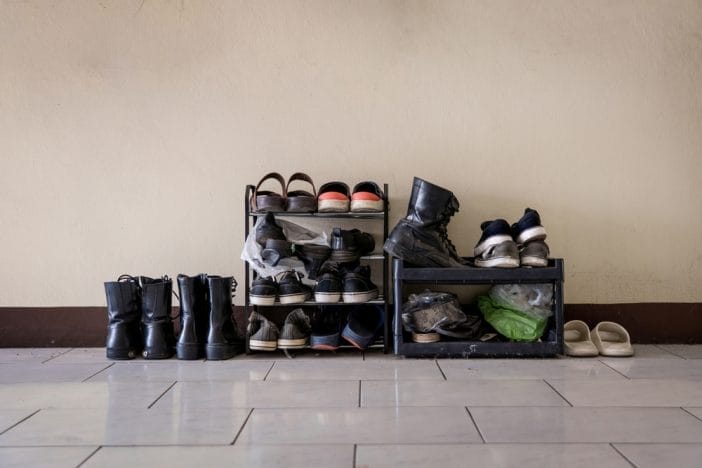
Entryways reveal the personal side of finances in ways many overlook. Organized, clean shoes suggest attention to detail, lifestyle prioritization, and a certain disposable income for maintaining personal items. Scuffed, mismatched, or chaotic footwear may hint at busy routines, practical spending, or simply a casual approach to material investment.
Even small habits communicate stability. A shoe rack, matching storage, or seasonal rotation shows foresight and resource management. Guests notice these details subconsciously, connecting order and care with broader financial behavior. The bottom line: footwear placement and upkeep act as a microcosm of household priorities, subtly revealing spending style, lifestyle organization, and personal habits.
7. Books and Entertainment: Knowledge and Leisure as Indicators
Books, music, and entertainment collections silently reflect financial priorities. A curated library signals investment in experiences, knowledge, and personal enrichment. Streaming subscriptions, gaming setups, or hobby materials suggest disposable income and lifestyle choices. Even the state of these collections communicates care, attention, and spending focus.
Guests notice not only the presence of books or hobbies but their organization, condition, and accessibility. Carefully maintained collections indicate thoughtfulness and a balance between investment and enjoyment. Even small details, like the mix of new releases and classic titles, hint at priorities and willingness to spend on leisure. Entertainment spaces reveal household rhythm, financial focus, and the type of life that occupants value, all without uttering a single word.
8. Cleanliness and Organization: The Ultimate Financial Clues
A sparkling home speaks volumes about both lifestyle and financial health. A meticulously clean, organized space signals attention to upkeep, investment in maintenance, and prioritization of quality over clutter. Messy or chaotic homes, even with expensive items, may suggest either a busy schedule or less focus on upkeep, revealing more about priorities than actual income.
Organization systems—everything from labeled cabinets to stylish storage solutions—communicate thoughtful spending. Guests notice even subtle details like folded linens, sorted closets, or a clutter-free counter, translating them into insights about resource management and financial discipline. Cleanliness and organization act as an overarching indicator, tying together all other cues and reinforcing perceptions about lifestyle, priorities, and financial health.
Life in Motion: How Guests Read Financial Stories
Every item, corner, and detail in a home broadcasts clues about priorities and resources. Furniture, lighting, décor, and organization all speak louder than words, painting a picture of financial habits without any conversation. Understanding these signals allows households to highlight strengths, elevate impressions, and create spaces that feel intentional and vibrant. Adjusting a few key areas can transform perception entirely, showing confidence, taste, and resourcefulness.
What’s your take? Have you noticed certain details in a friend’s home that immediately suggested something about their lifestyle or financial choices? Share your stories, ideas, or strategies in the comments below.
You May Also Like…
8 Rent-to-Own Traps That Can Derail Your Finances For Years To Come
Why Legal Guidance Matters When Navigating Complex Financial Challenges
9 Friendship Mistakes That Create Distance
6 Things Mechanics Hate About Modern “Eco-Friendly” Engines
10 Secrets Men Keep Even From Closest Friends
