
7 Garage Tools Every Serious Car Guy Needs in His Arsenal
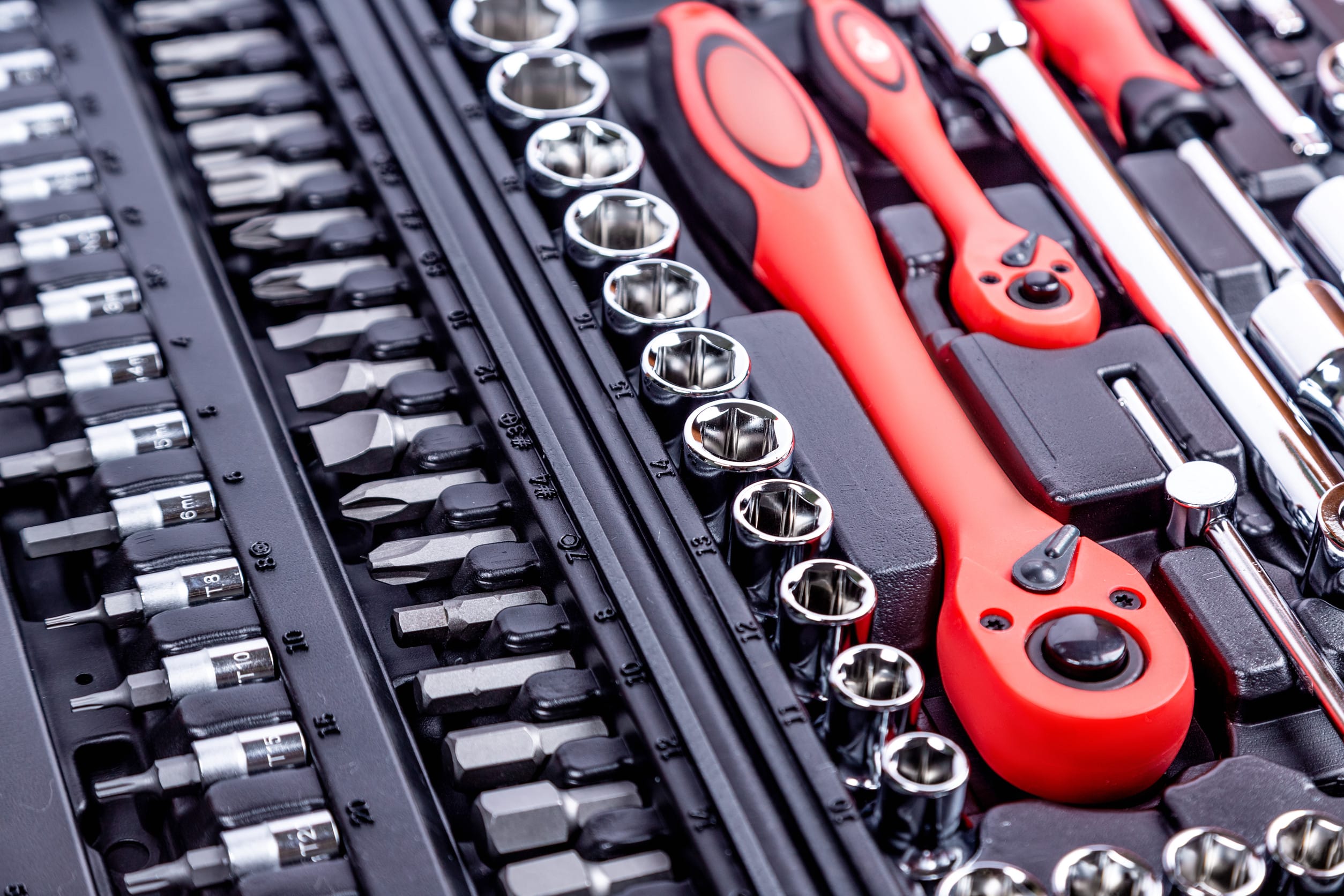
Here’s the thing: you can’t call yourself a serious gearhead if your garage is full of half-broken screwdrivers and cheap tool sets. Whether you’re chasing performance or just keeping your ride in tip-top shape, having the right tools makes the difference between a weekend victory and a wasted Sunday. These seven garage tools are what separate the amateurs from the enthusiasts. Choose quality, use them well, and your car (and your sanity) will thank you.
1. A Robust Socket and Ratchet Set
If there’s one tool combo no car guy should skip, it’s a versatile socket and ratchet set. You’ll need both metric and SAE sets, as well as drive sizes (¼-, ?-, and ½-inch) to cover just about every bolt on your car. Pick one with extensions, universal joints, and deep sockets so you can reach the awkward recesses. Cheap sets will strip or break; invest in tools built of hardened chrome vanadium or equivalent materials. With a solid socket set, most fastener jobs go from painful guesswork to “click, done.”
2. Torque Wrench for Precision Tightening
Overtightening is almost as dangerous as undertightening; that’s where a torque wrench earns its place in your arsenal. You’ll get accurate readings for critical components like cylinder heads, lug nuts, or suspension bolts. Make sure your torque wrench covers the typical range of your vehicle (say 10–150 ft-lb for most jobs, more for bigger components). Periodically recalibrate it to keep readings trustworthy. Once you use proper torque, you avoid stripped threads, warped parts, and unsafe assemblies.
3. Floor Jack and Jack Stands for Safe Lifting
You can’t work under a car that you can’t lift, and you can’t trust a cheap jack alone to keep it there. A quality floor jack (3-ton or more, low profile) allows you to get the car off the ground. But the real hero is the jack stand: rated supports that keep the car safe while you work underneath. Always lift with the floor jack, then lower onto stands; never trust the jack alone. With proper lifting gear, you’ll be able to change oil, exhaust, suspension parts, and more with confidence.
4. Impact or Breaking Tools for Stubborn Fasteners
Rust, grime, and torque make many bolts unwilling to budge with hand tools alone. That’s why you need a breaker bar or impact wrench to deliver high torque bursts. A breaker bar gives you muscle indirectly; an impact (air or electric) gives speed and power. Keep impact-rated sockets too. They’re built to take the shock. These tools will rescue you from seized bolts on brakes, driveshafts, or engine mounts. With them, you won’t waste a day fighting capital-T trouble bolts.
5. A Creeper or Wheeled Work Mat
Working under a car on your back is miserable without mobility. That’s why a creeper (low-profile wheeled board) is essential. It lets you roll in and out with ease and avoids dragging your arms or scraping your clothes. Some models fold or convert to seats so they aren’t in your way when not in use. Even rolling on cardboard is better than nothing, but a real creeper gives you speed, comfort, and efficiency. As one mechanic observed, it’s amazing how much “extra time” you get when you aren’t constantly getting stuck under there.
6. Diagnostic Tools: Scanner, Multimeter, and Pressure Gauges
Modern cars are half an electronic puzzle, and you’ll need tools to speak their language. An OBD-II scanner lets you pull trouble codes, reset lights, and diagnose engine issues. A professional-level scanner may even connect to ABS, airbag, and transmission systems. A multimeter helps you test wiring, voltage drops, and continuity. Pressure gauges (fuel, oil, compression) let you verify mechanical health. With these diagnostic tools, you won’t guess; you’ll assess, repair, and confirm the fix.
7. Quality Work Light and Magnetic Parts Trays
You can’t fix what you can’t see. A strong work light (LED, flexible neck, rechargeable) brilliantly illuminates engine bays or undercars. Magnetic trays or parts catchers keep bolts and fasteners from rolling off into the abyss. Use magnets or trays on your fender to hold nuts while you work. Combine light + parts control and you’ll avoid cursing lost hardware in the middle of your project. For any serious job (even quick ones), these two inexpensive tools prevent frustration and time wasted.
Building a Garage That Works for You
These seven tools form the foundation of a garage where serious automotive work happens. With quality sockets, torque control, lifting gear, impact tools, mobility, diagnostics, and lighting, you’ll be ready for most jobs. Over time, you’ll add specialty gear (like engine stands or welders), but get these right first. A well-equipped garage isn’t about having every tool imaginable. It’s about having the reliable ones that let you finish the job.
Which of these garage essentials will you add next to your kit, or which one has already saved your day? Share your story in the comments!
